Erebiola butleri


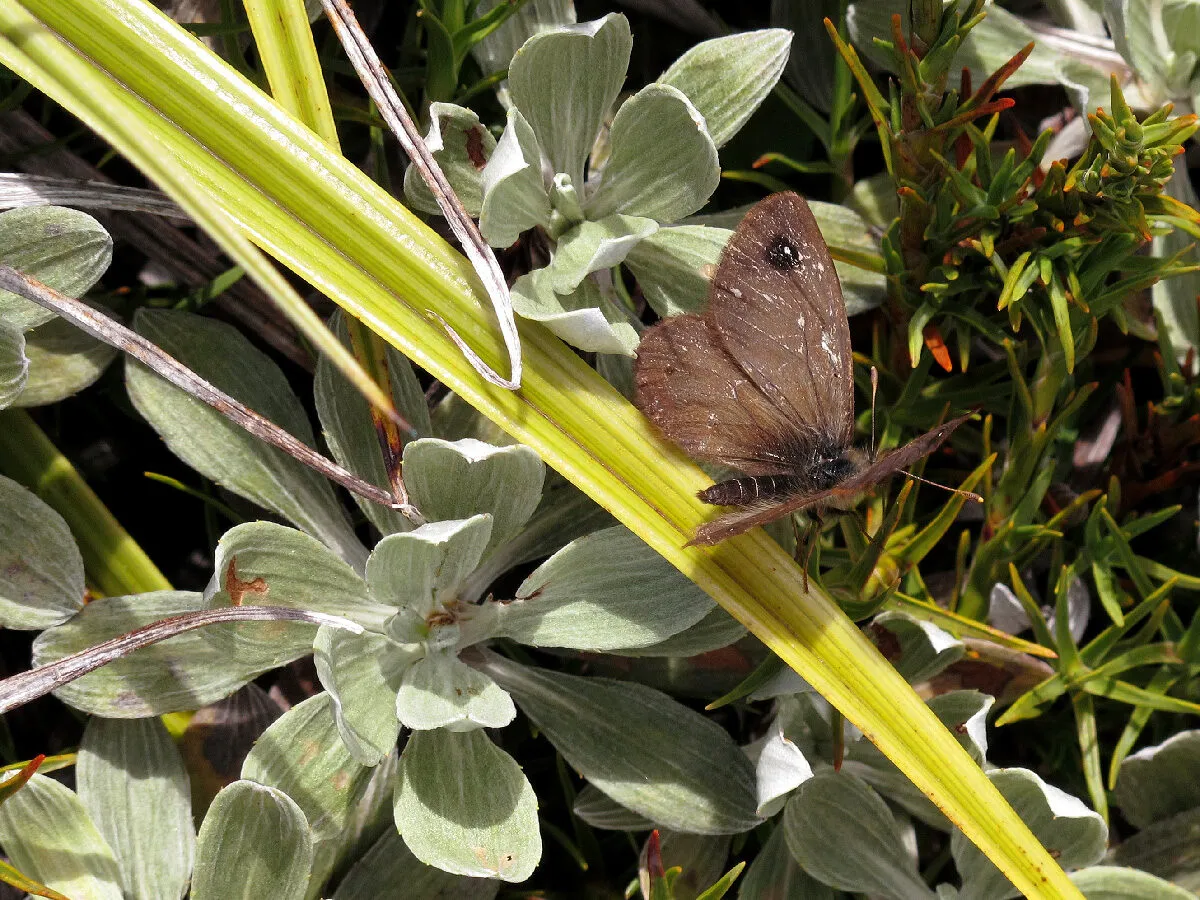
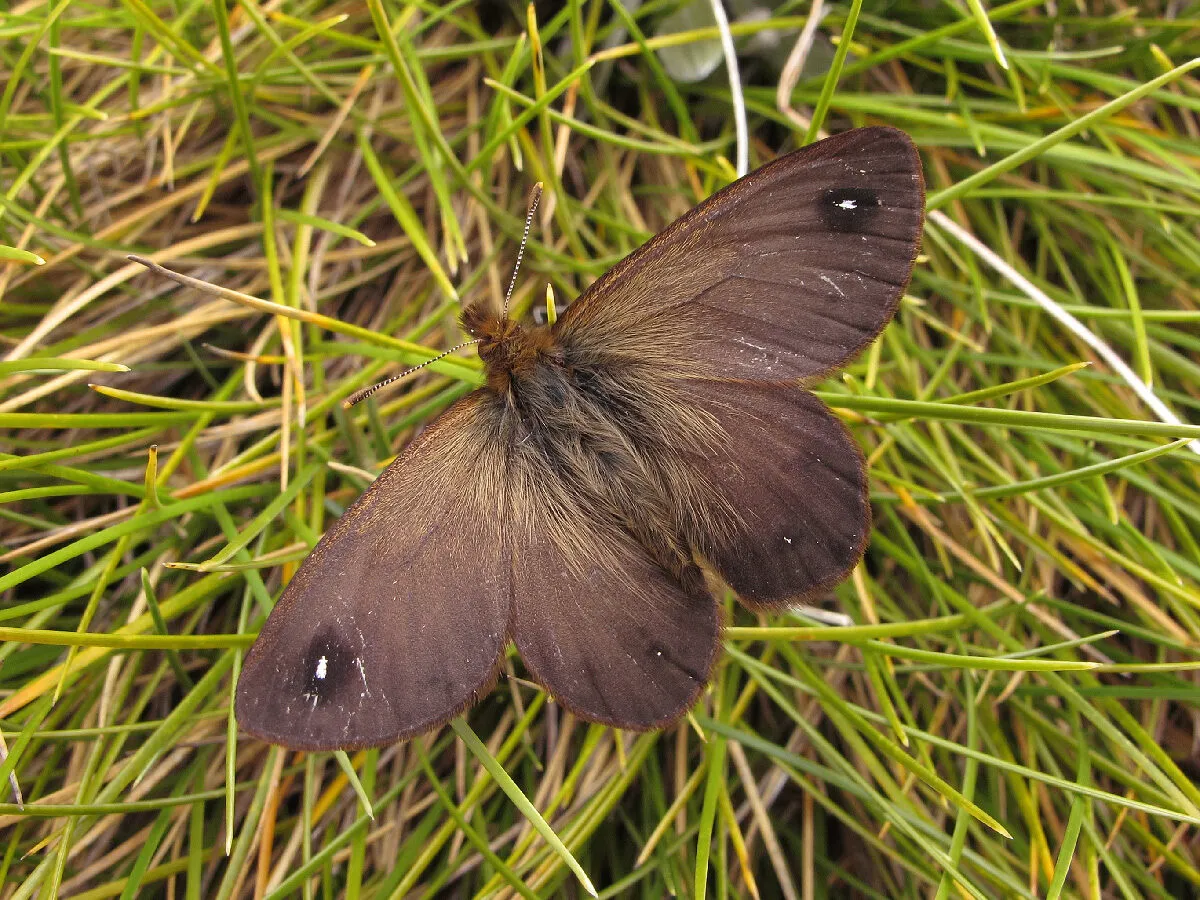
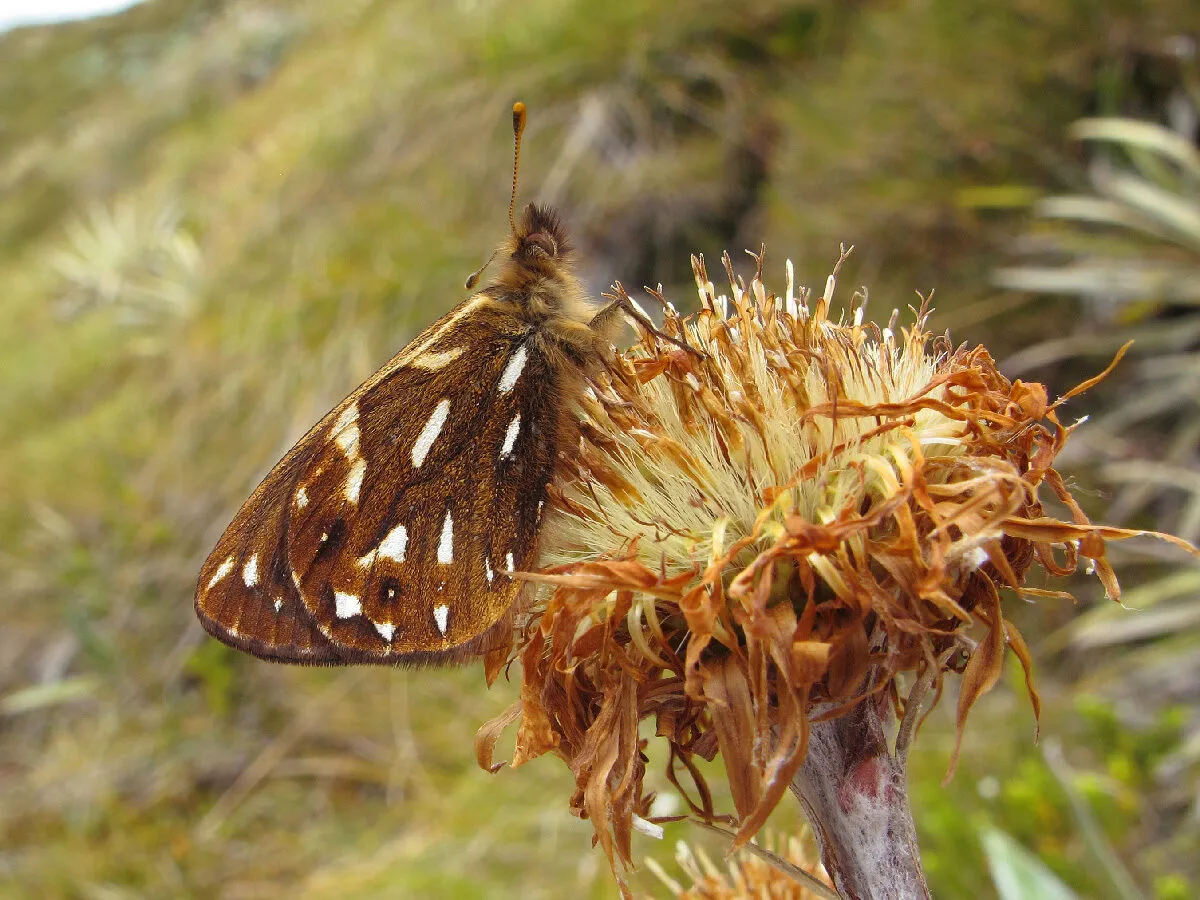
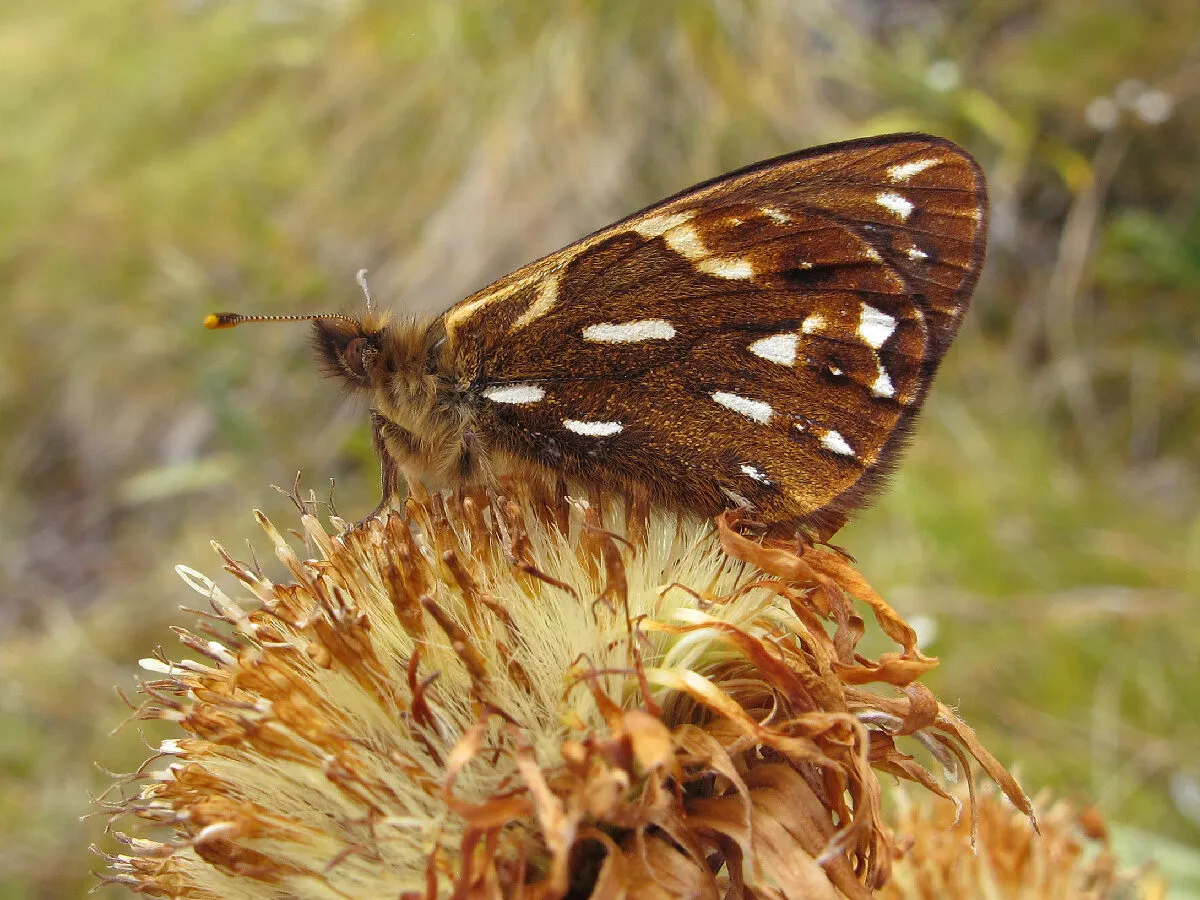
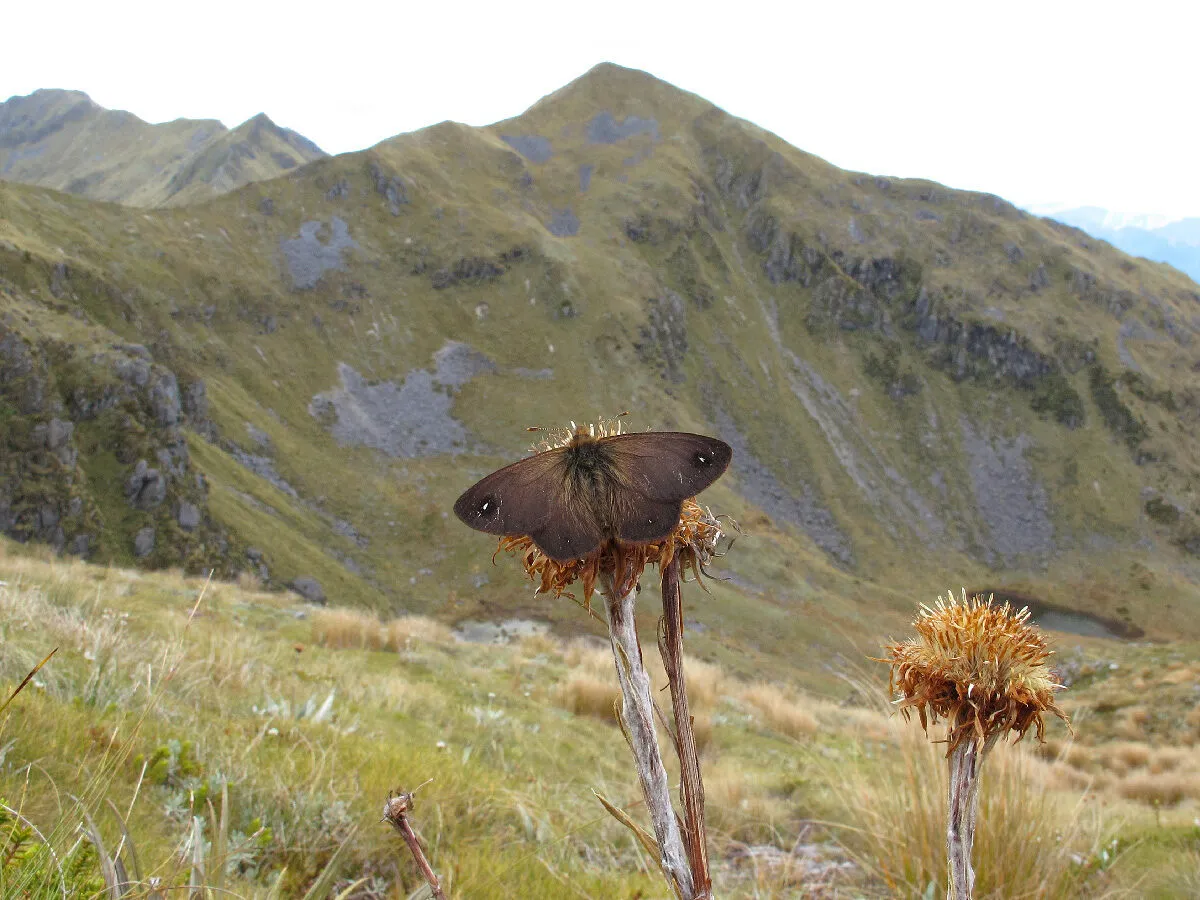
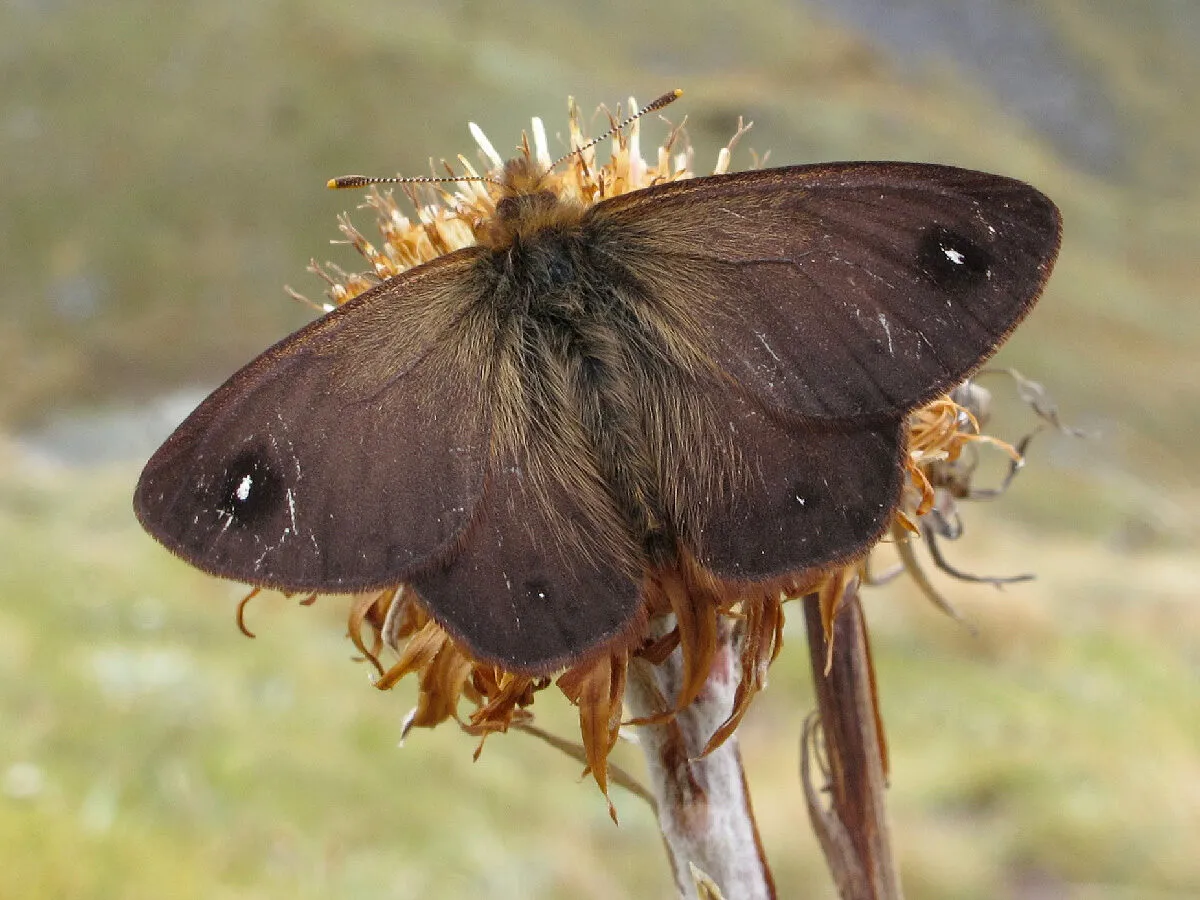
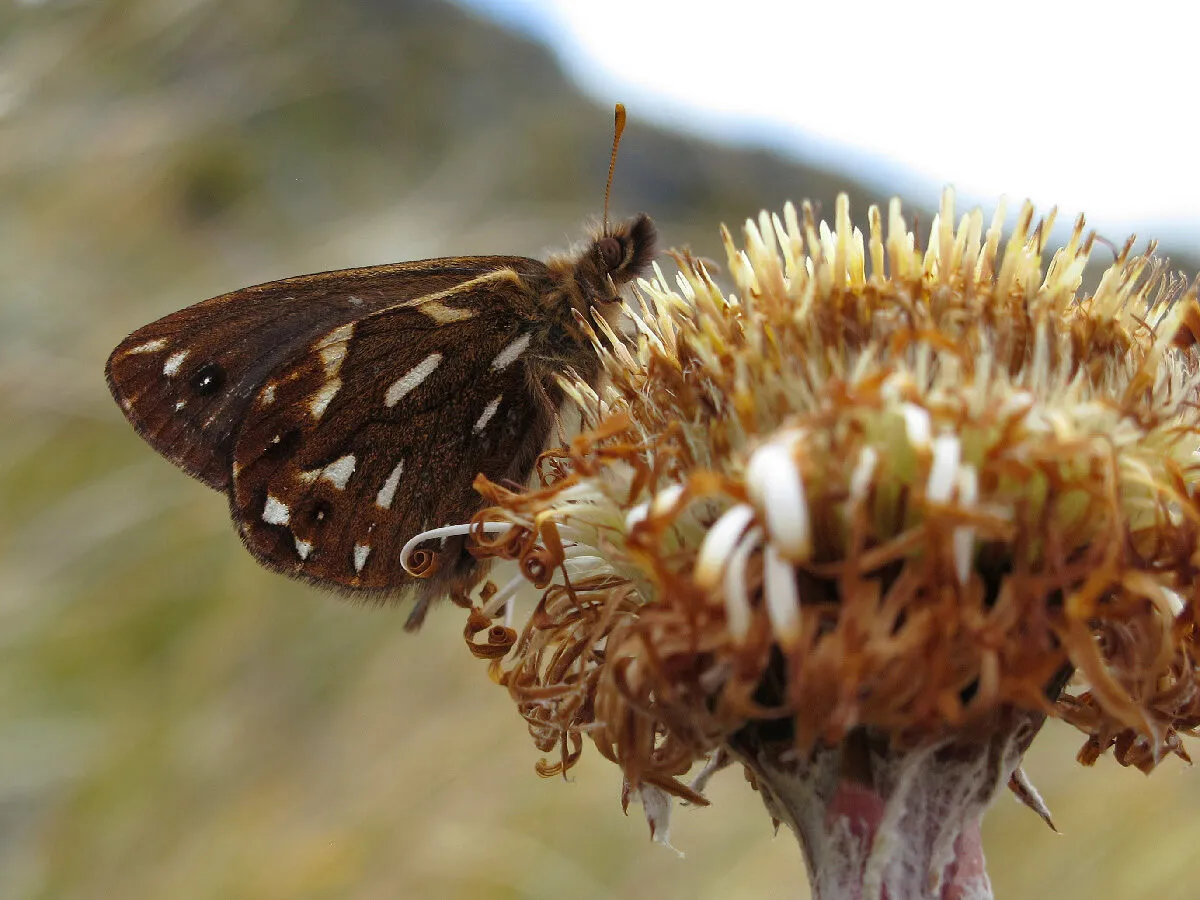
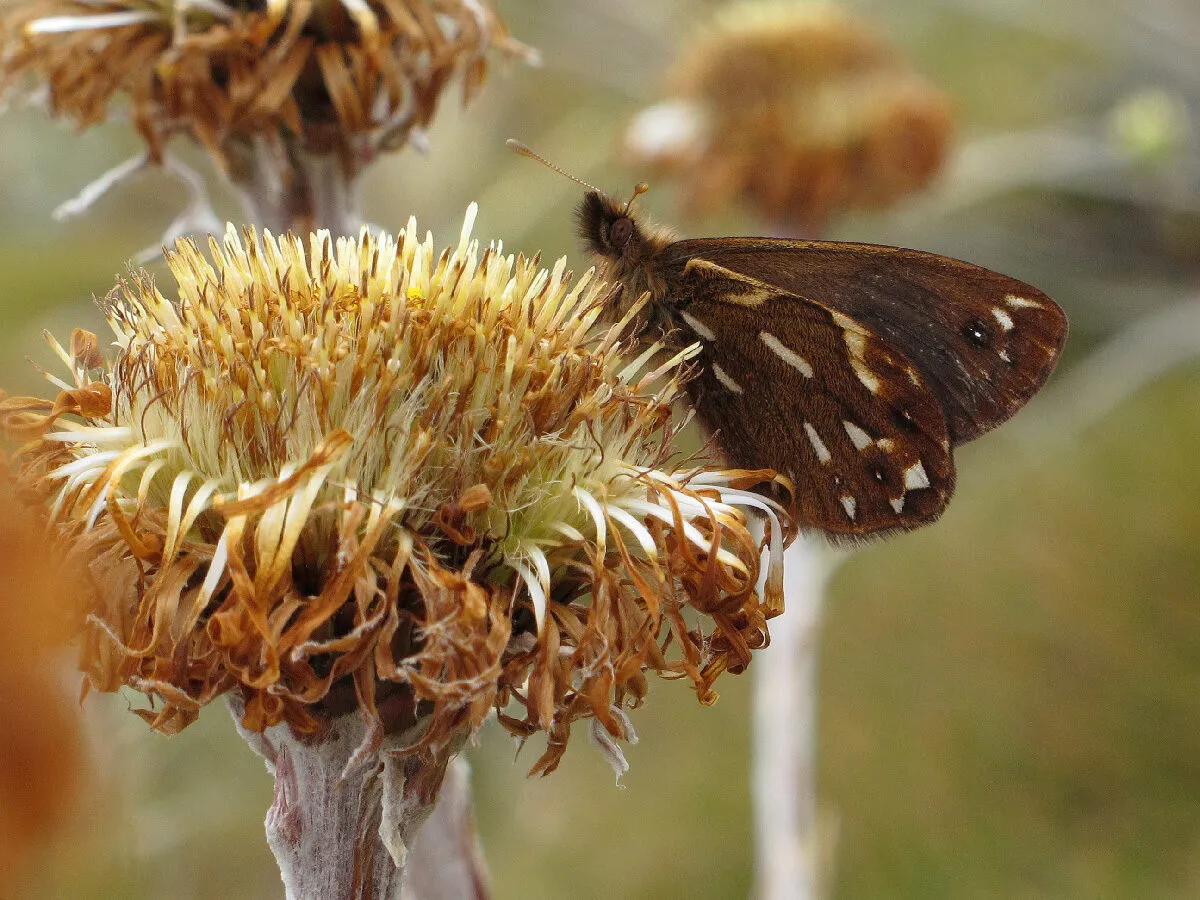
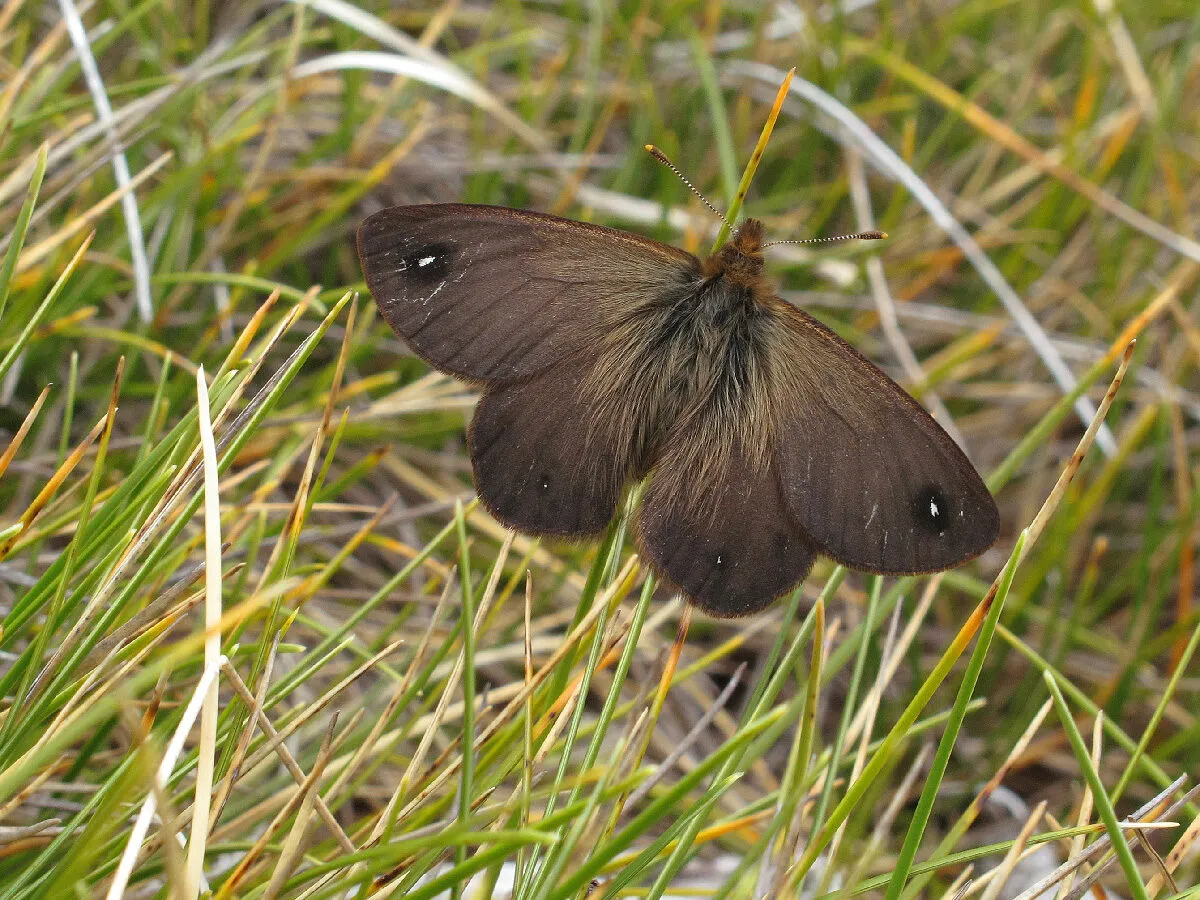
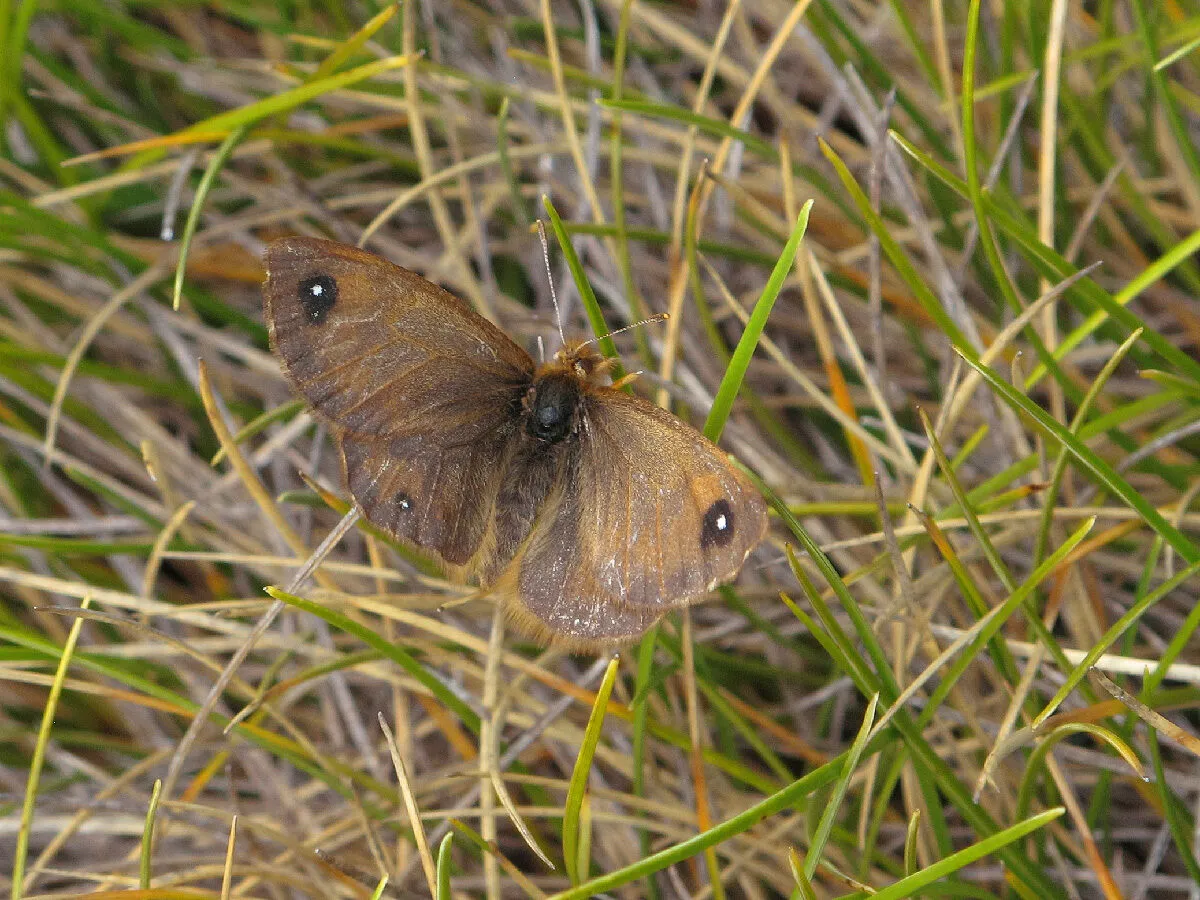
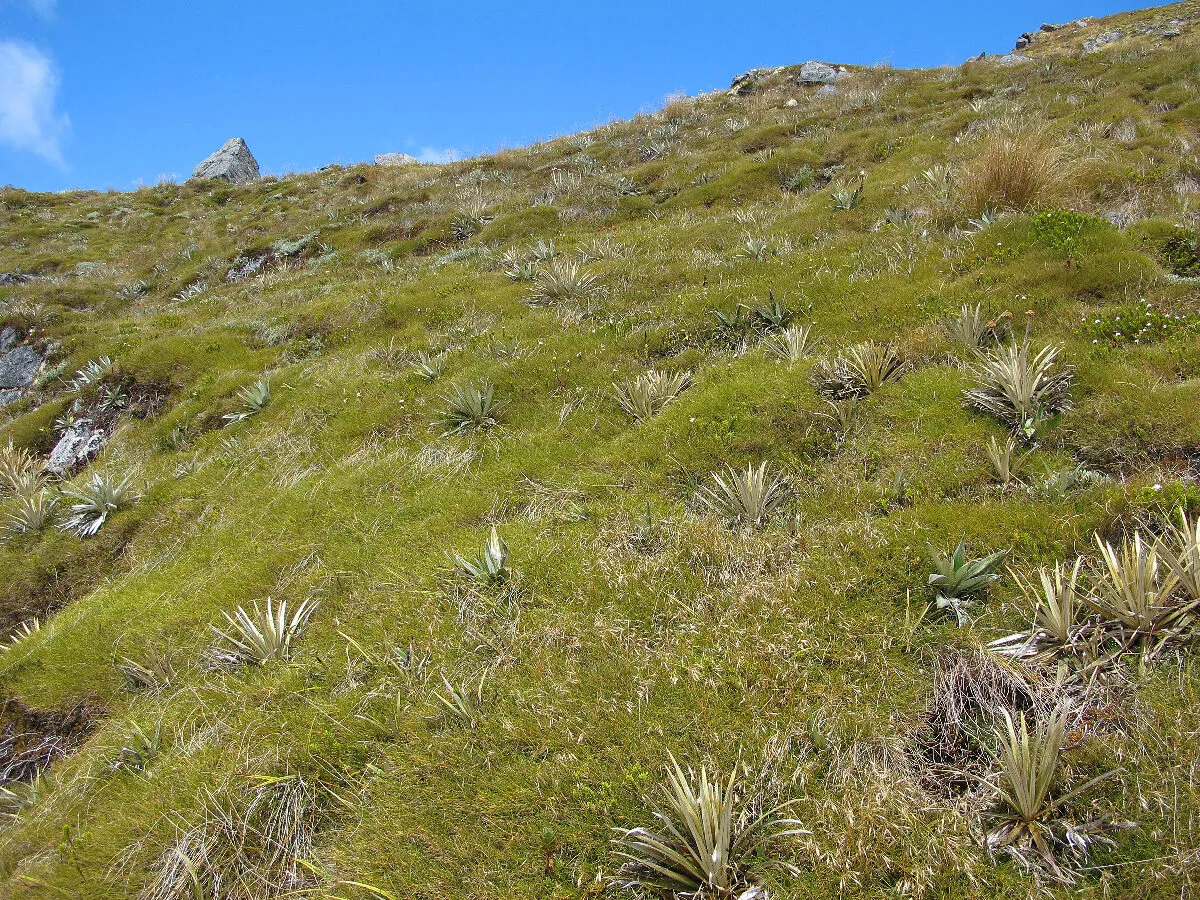
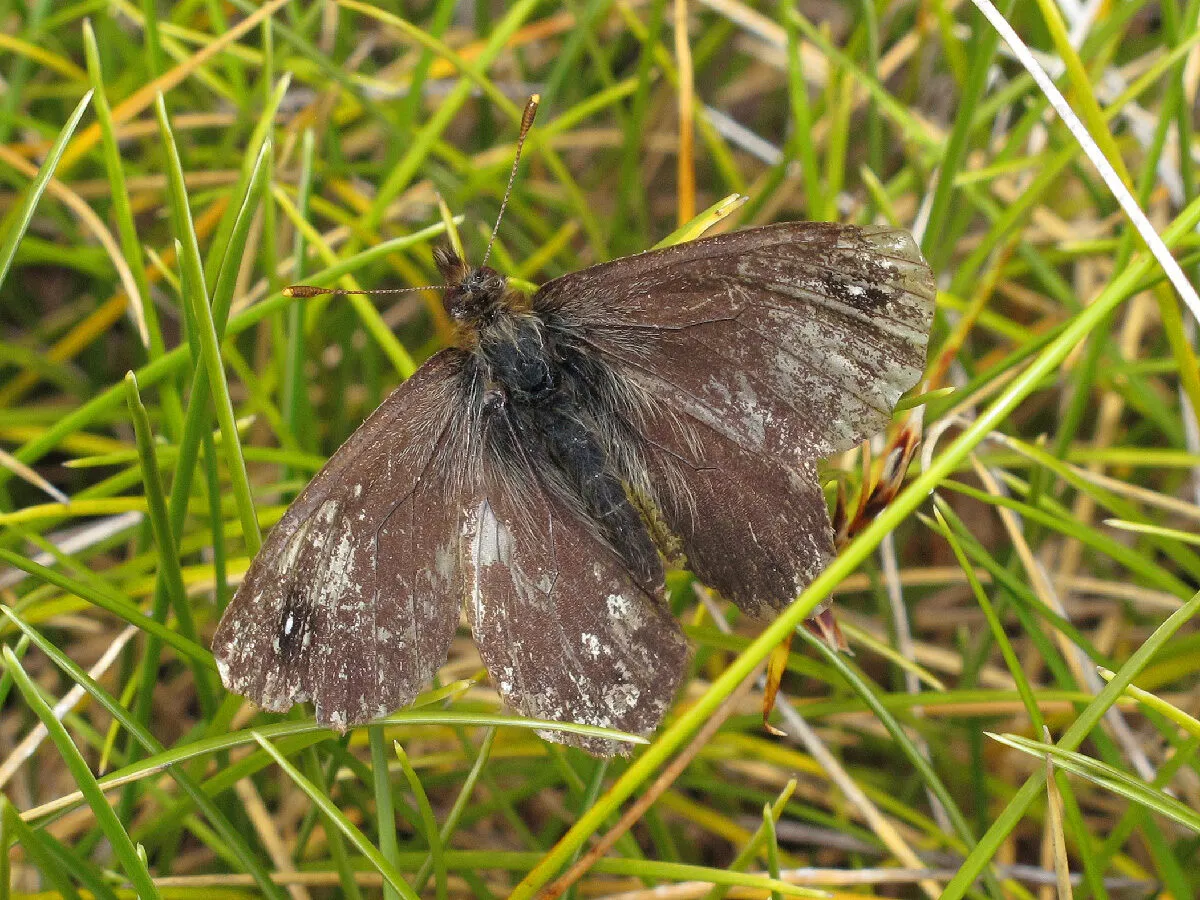
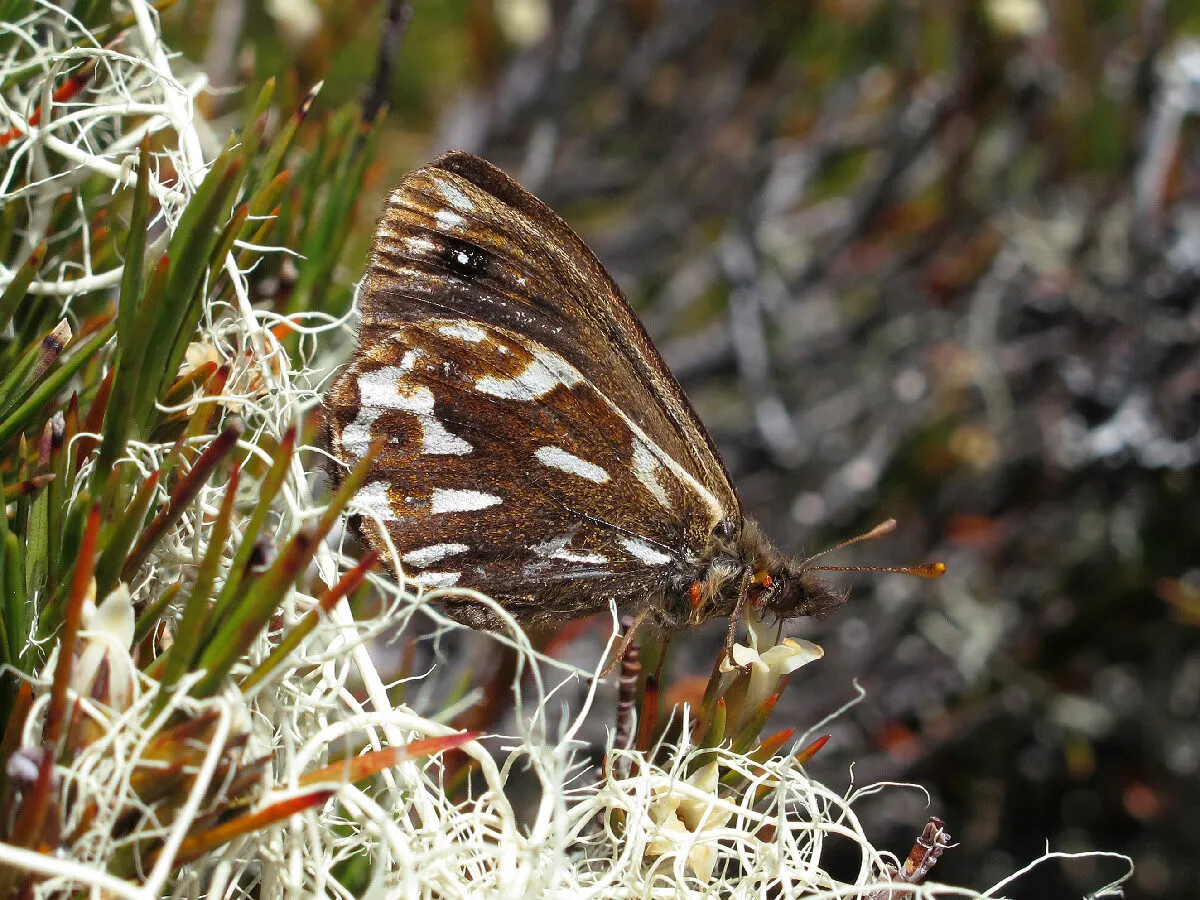
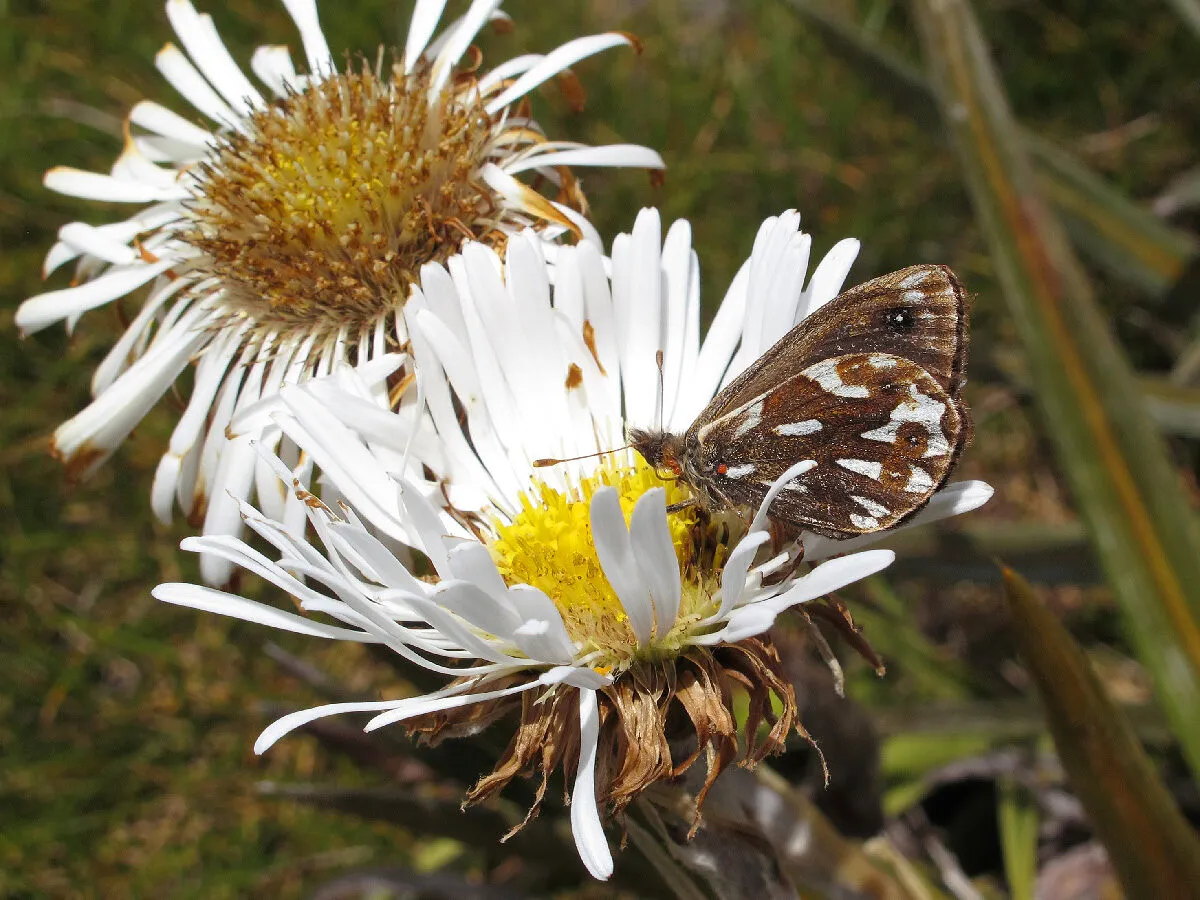
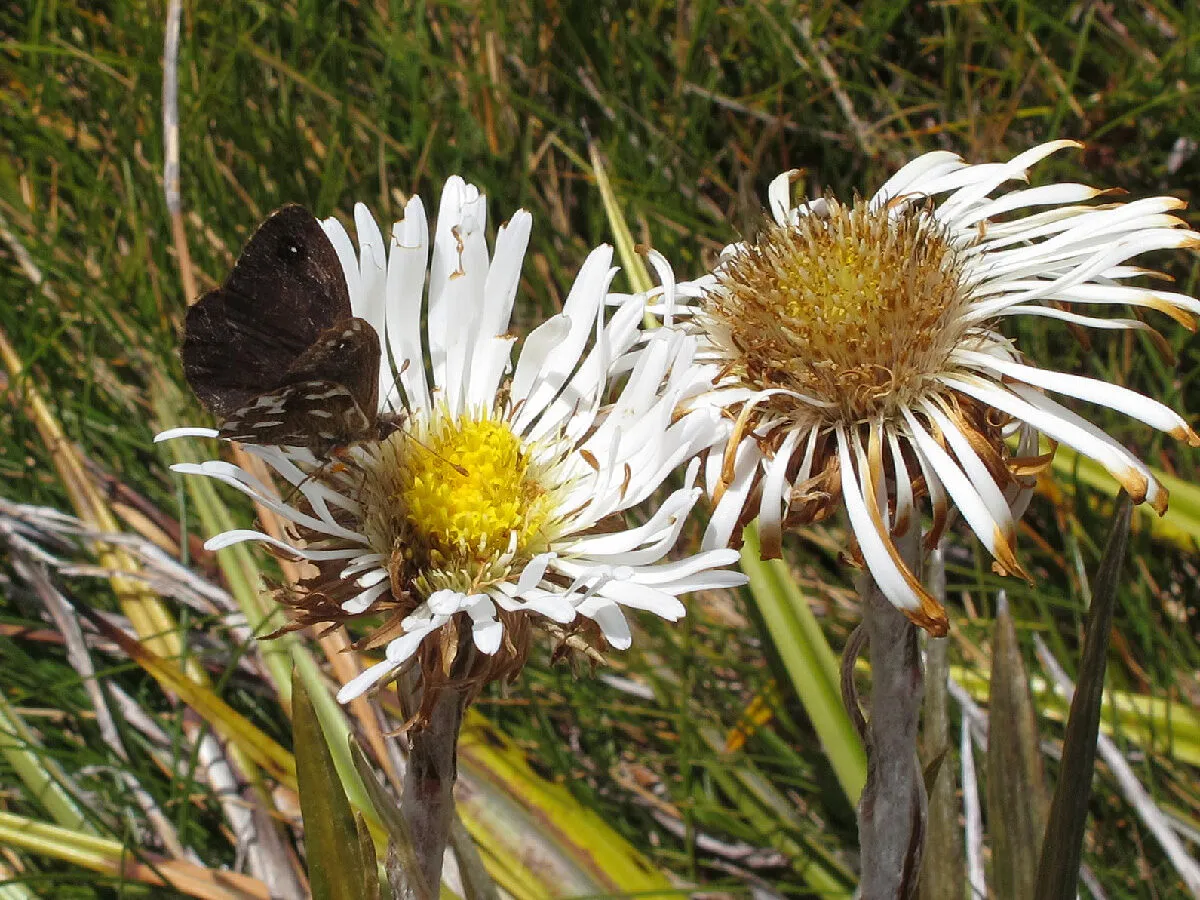
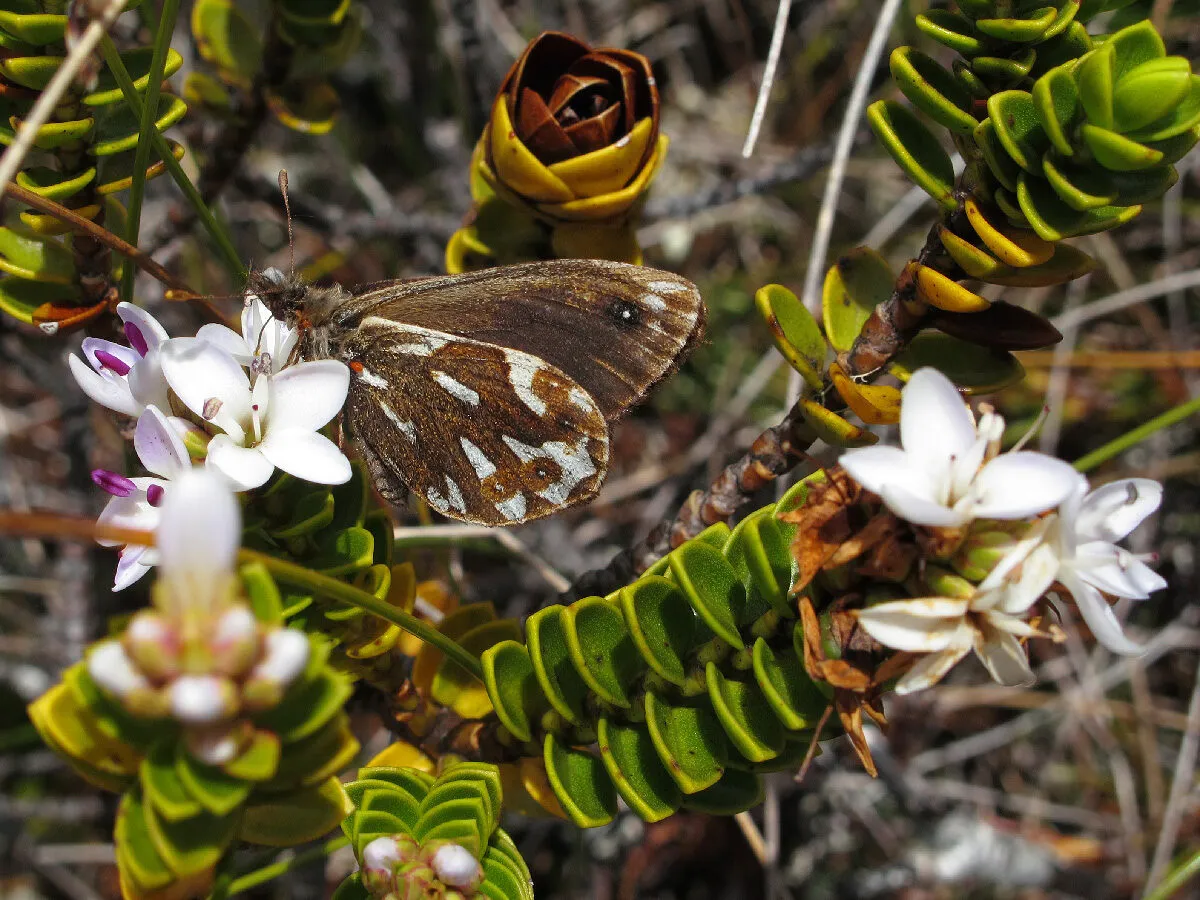
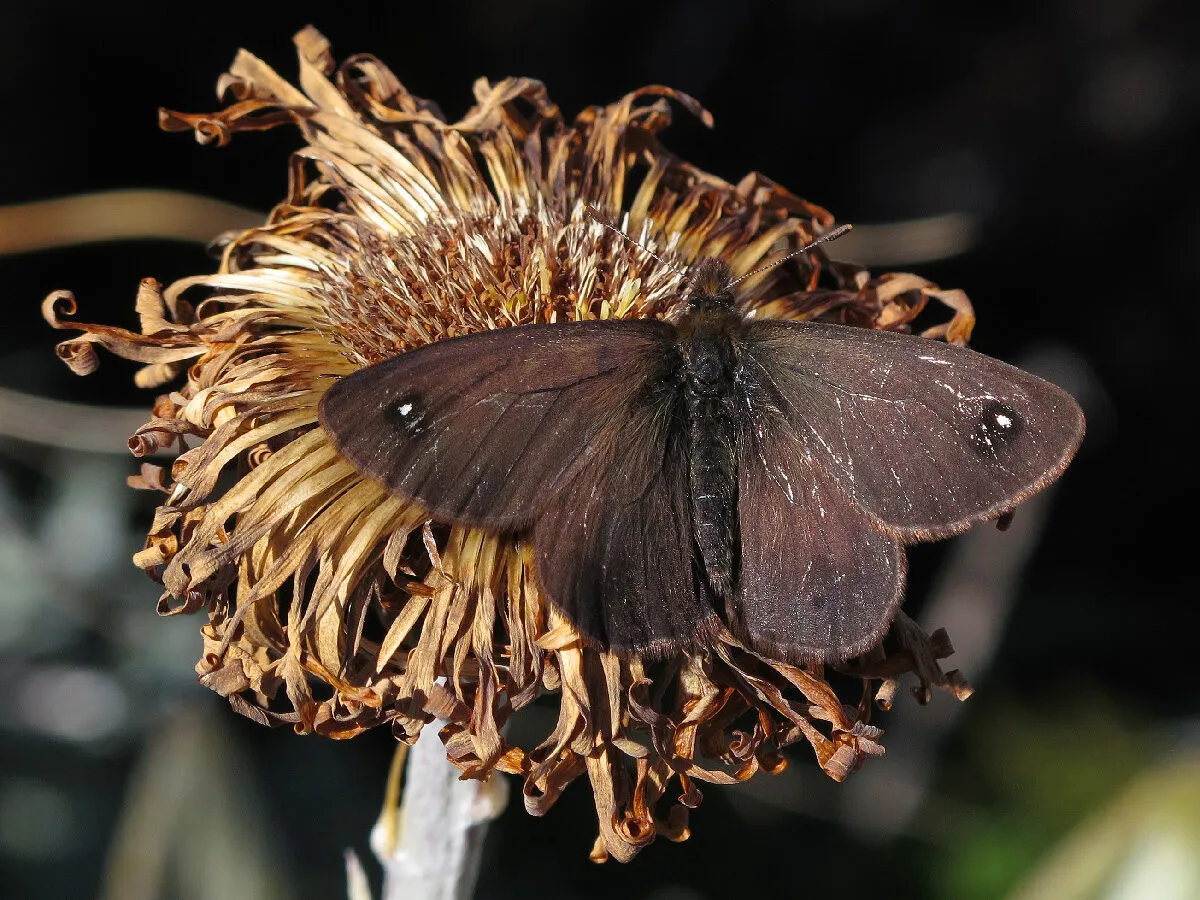
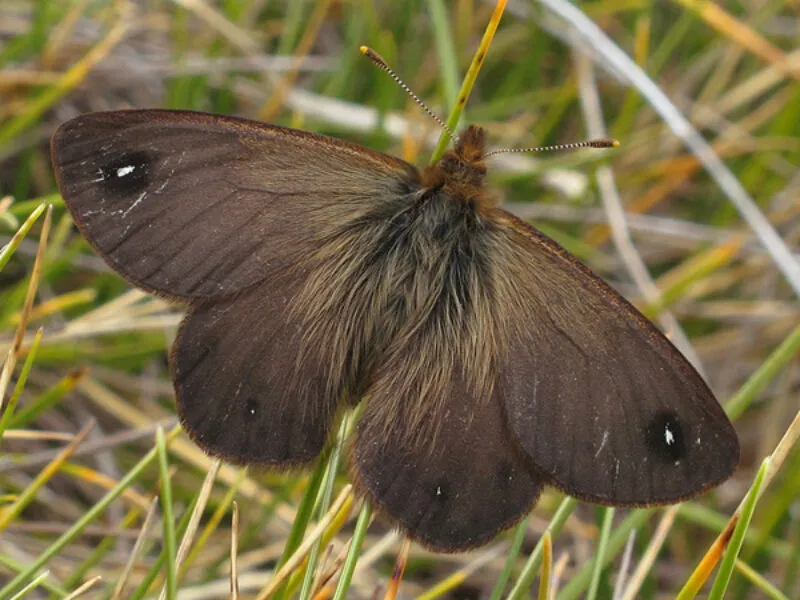
Erebiola butleri is one of only two dark brown alpine butterflies found in the mountains of New Zealand’s South Island. In contrast to Percnodaimon merula, it occurs in grasslands and appears to be rare and localized. The conspicuous white markings on the wing underside are a striking character shared with the three species of Argyrophenga, consistent with the close relationship between these genera suggested by recent phylogenetic studies. These markings serve as effective camouflage when the butterfly feeds on the white alpine flowers it visits or rests among grasses containing numerous dry leaves. In Erebiola butleri, the wings wear relatively quickly, mostly as a result of repeated physical contact with the stiff, pointed leaves of Chionochloa australis, with which the species maintains a close ecological relationship. This wear typically manifests as white scratches where the dark brown scales have been scraped away.
IDENTIFICATION

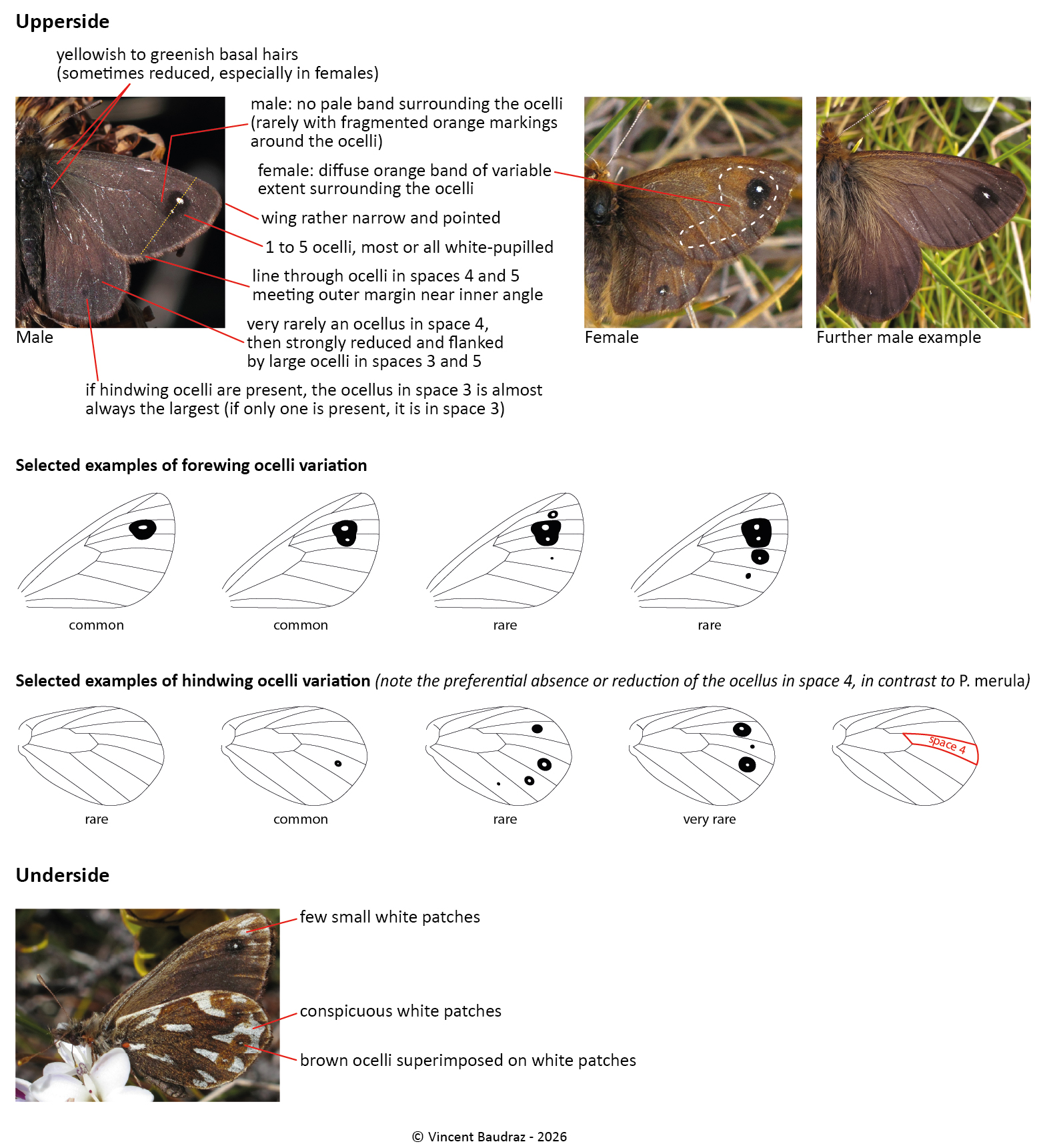
The criteria below were designed both to highlight species-specific characteristics and to facilitate comparison with the superficially similar Percnodaimon merula.

GEOGRAPHICAL VARIATION

Although only a limited number of specimens are available for examination, Erebiola butleri appears to exhibit a gradual north-south cline in wing pattern. Towards the south, the number and size of the ocelli tend to increase. In females, the orange band on the forewing upperside becomes, on average, more extensive, together with the orange markings on the hindwing upperside. Southern males may also show fragmented orange markings around the ocelli on the forewing upperside, whereas such markings have not been observed in northern populations.

HOST PLANT

Eggs have been observed laid on low branches of Dracophyllum pronum (Gibbs, 1980), a sprawling shrub that is clearly not the larval host plant. This behaviour is not surprising, as females of the related species Percnodaimon merula and several European alpine Erebia species also lay their eggs on nearby substrates rather than directly on the larval food plant, presumably to optimize incubation conditions and maximize hatching success. Oviposition on a rigid, slow-growing plant is likely advantageous because its branches remain unchanged during the approximately two-week incubation period and are only minimally moved by wind. In contrast, surrounding grasses continue to grow throughout the incubation period and are constantly moved by wind, potentially damaging exposed eggs through repeated contact. The shrub may therefore provide a more stable and secure substrate for egg development while also offering favourable microclimatic conditions, both of which may contribute to successful incubation and hatching.

The plant on which larvae feed after hatching and during their early instars is most likely Chionochloa australis. This species is consistently present within the habitat of Erebiola butleri, and females are predominantly observed over or near patches of this grass. In addition, rearing experiments (Gibbs, 1980) showed that young larvae readily fed on various lawn grasses while refusing tall tussock grasses, suggesting a preference for fine-leaved grasses during the early instars. Mature larvae, however, have been observed feeding on tall tussock grasses (Chionochloa spp.) until pupation, despite these grasses were rejected by young larvae in rearing experiments (Gibbs, 1980).

HABITAT

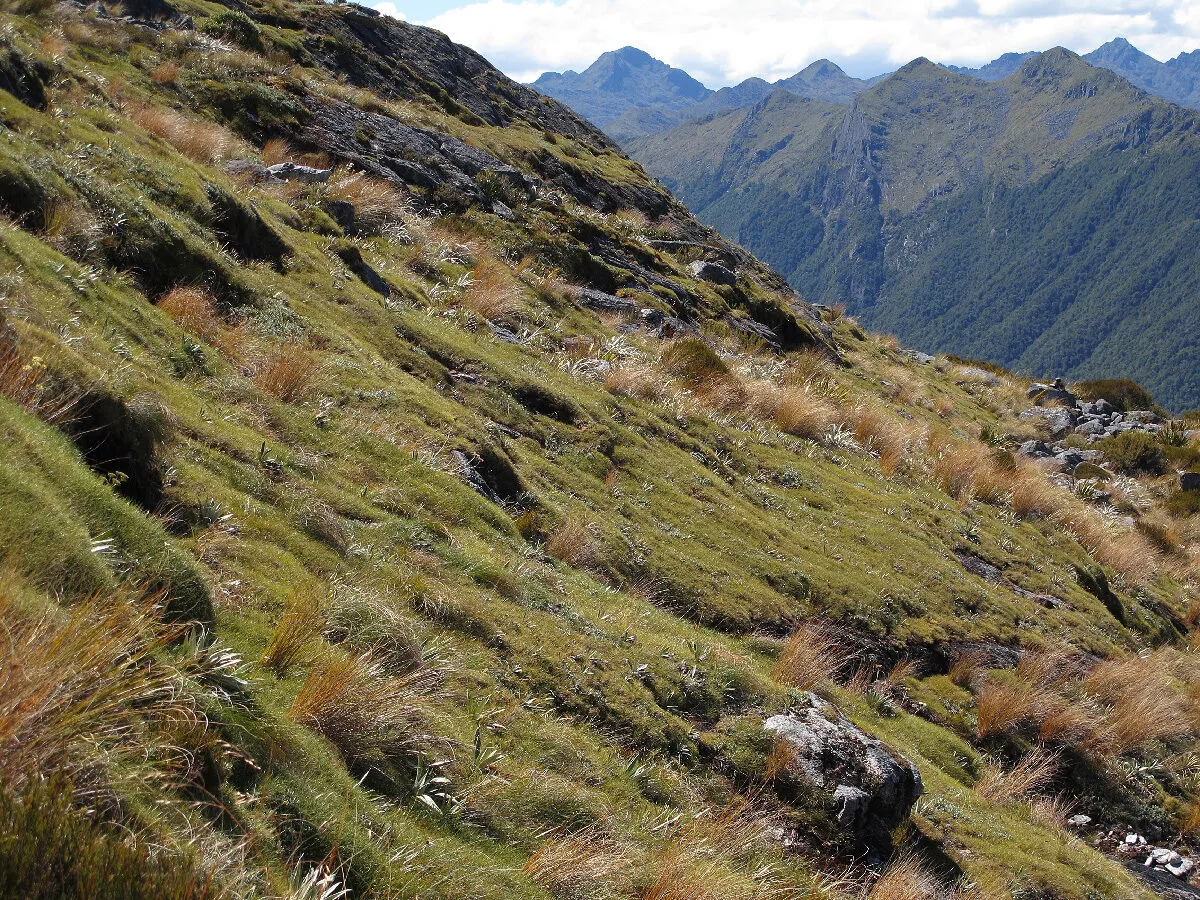
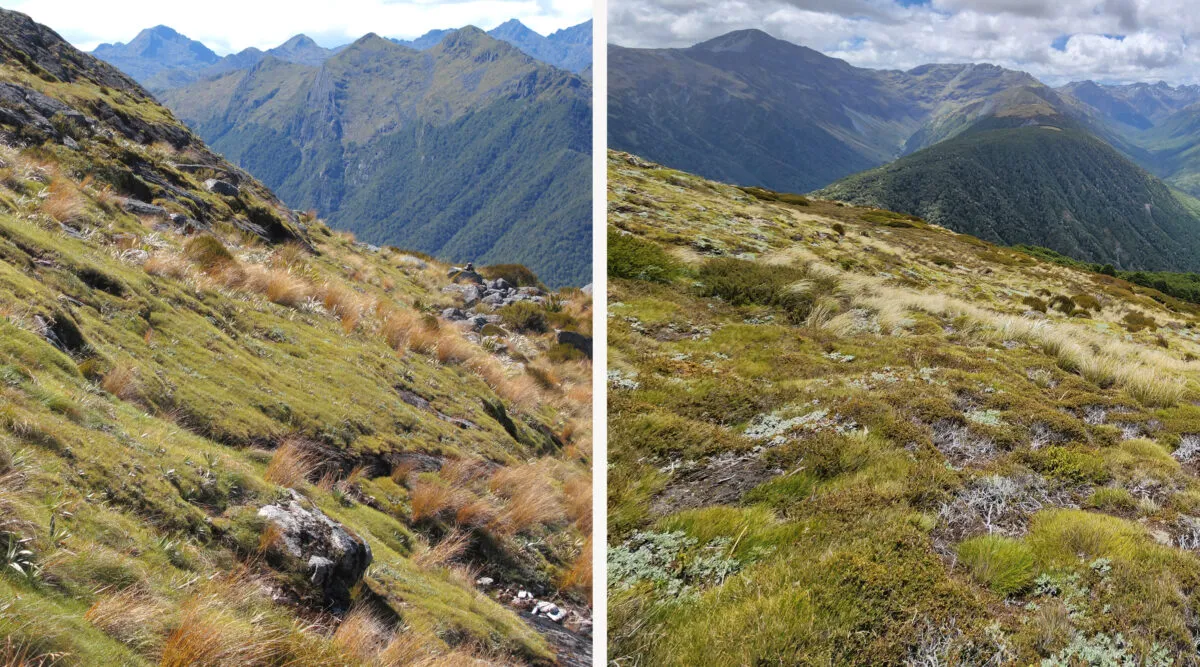
Erebiola butleri inhabits moist alpine grasslands with predominant low vegetation above the treeline in New Zealand’s Southern Alps. Observations of oviposition behaviour and larval feeding preferences, together with the requirement of nectar sources for adult feeding, indicate that Erebiola butleri requires a heterogeneous vegetation structure, with different vegetation elements supporting different stages of the life cycle.

Such ecological requirements may help explain the apparent rarity and localized distribution of the species. Alpine grasslands bringing together all the vegetation elements required by eggs, larvae and adults in close proximity may be relatively uncommon.

Two examples of Erebiola butleri habitat, combining alpine grassland dominated by Chionochloa australis with subordinate tall tussock grasses and dwarf shrubs. Left: Mount Haast (West Coast), 1300 m, 7 February 2026. Right: Lewis Pass heights (West Coast), 1400 m, 12 January 2026. Photos: Vincent Baudraz.

LIFE CYCLE

Whether Erebiola butleri completes its life cycle in one or two years remains unknown. As a simple approach to this question, the years of the 48 currently available unique iNaturalist records were examined to determine whether adult records showed a predominance in either odd- or even-numbered years, as would be expected if the species had a predominantly two-year life cycle. Interestingly, 32 of the 48 records (67%) originate from odd-numbered years. Under a random distribution between odd- and even-numbered years, such an imbalance would be expected in less than 2% of cases (binomial test, p = 0.0147). Although this pattern does not demonstrate a two-year life cycle, it is consistent with the possibility that the species develops predominantly over two years, while some individuals follow a different developmental schedule.

OCCURRENCE RECORDS

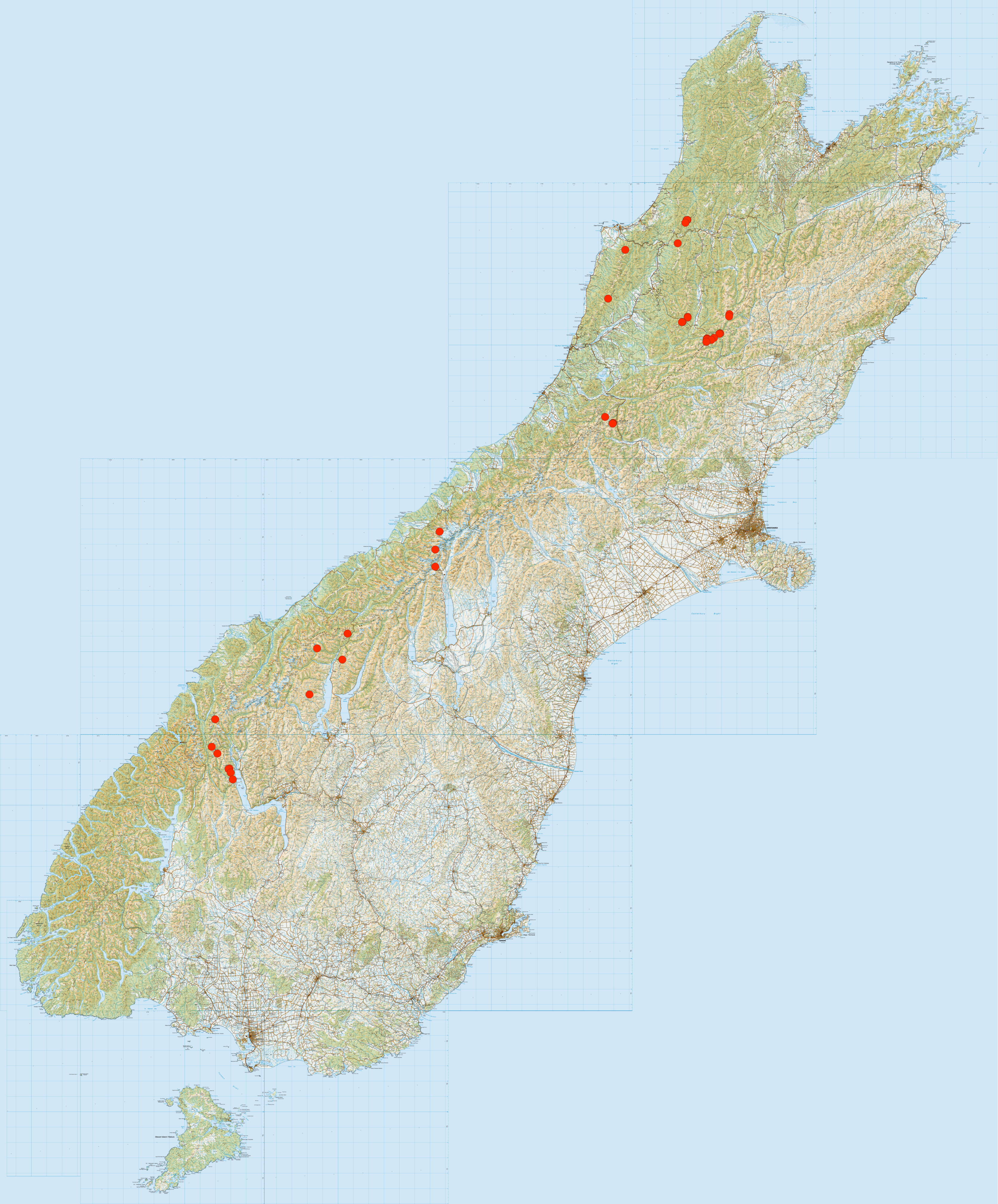
Occurrence records of Erebiola butleri from iNaturalist (accessed 2026). Basemap from LINZ Topo250 series.

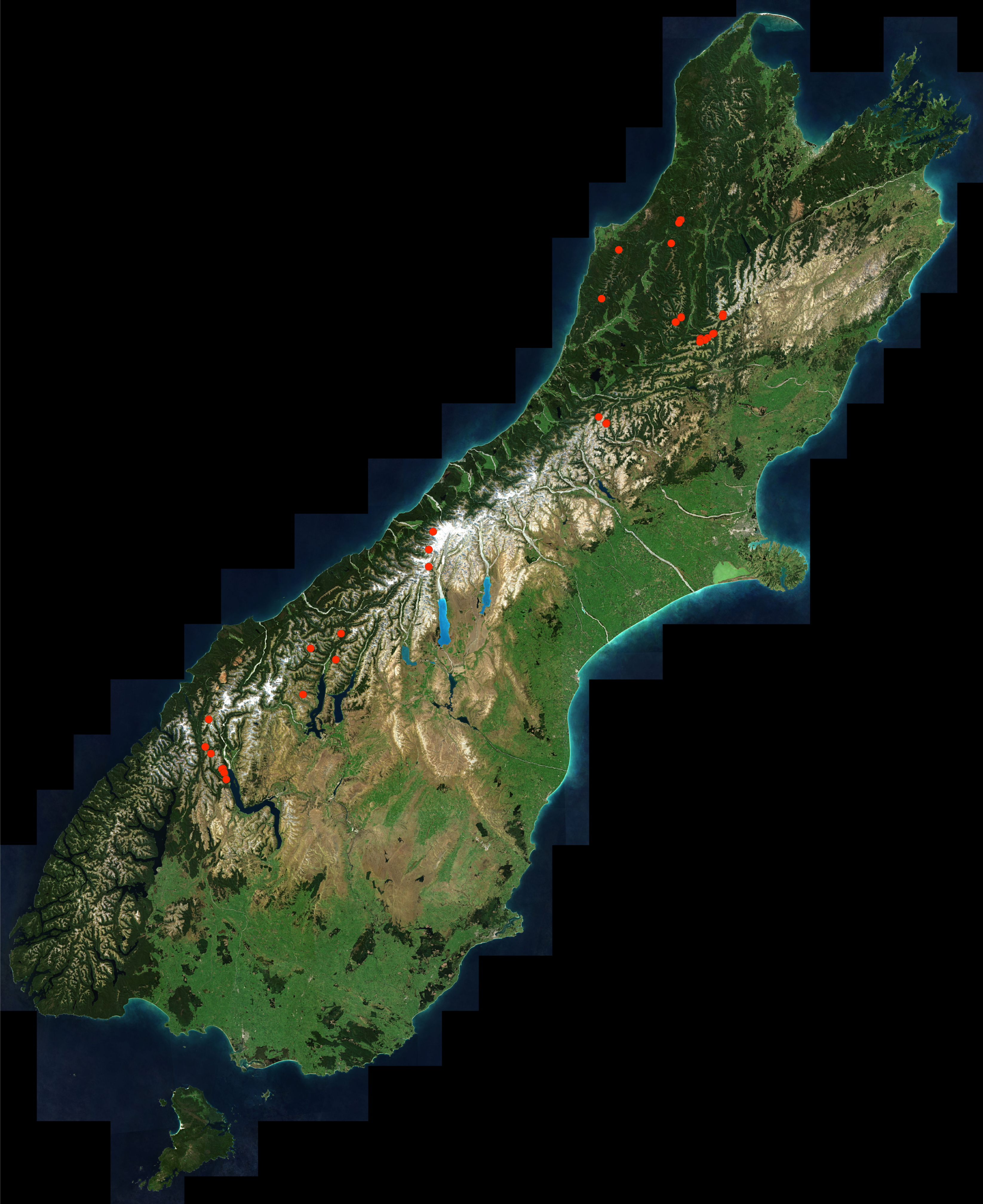
Occurrence records of Erebiola butleri from iNaturalist (accessed 2026). Basemap from LINZ 10 m satellite imagery (2022–2023).

ALTITUDINAL DISTRIBUTION AND FLIGHT PERIOD

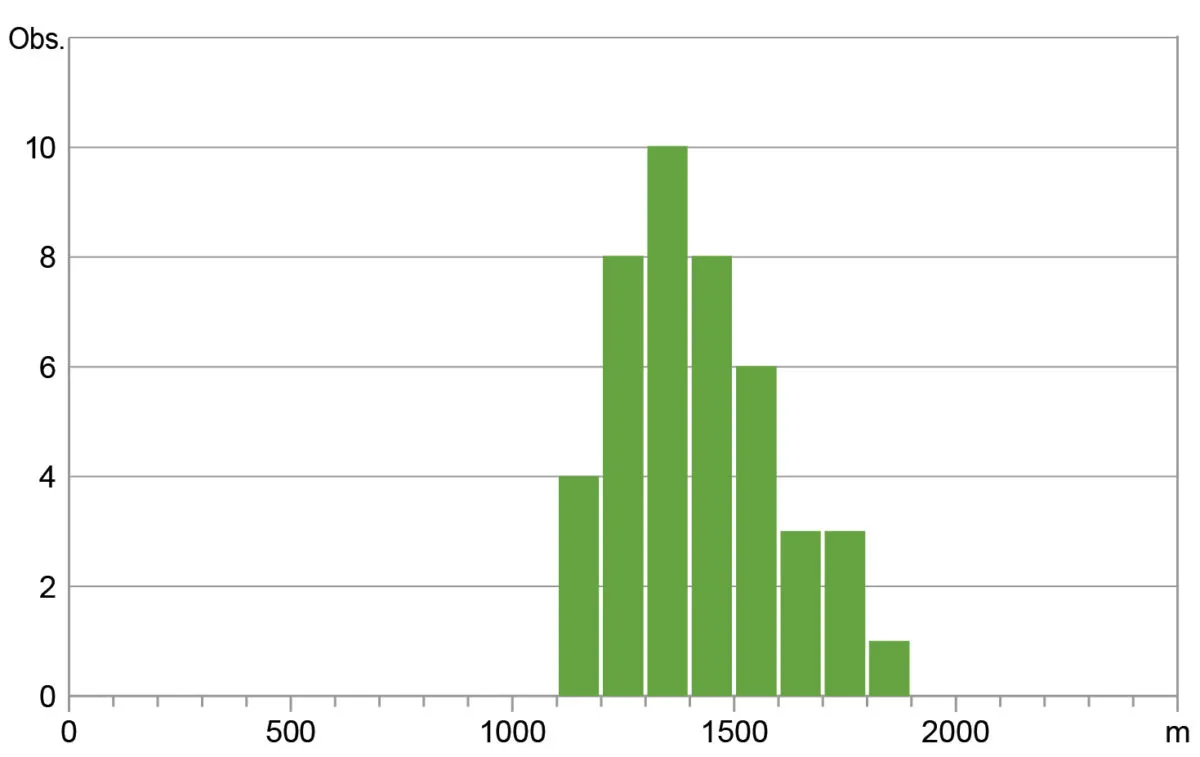
Altitudinal distribution of Erebiola butleri based on iNaturalist occurrence records. Elevations extracted from the LINZ 8 m Digital Elevation Model (2012) at occurrence coordinates (accessed 2026).

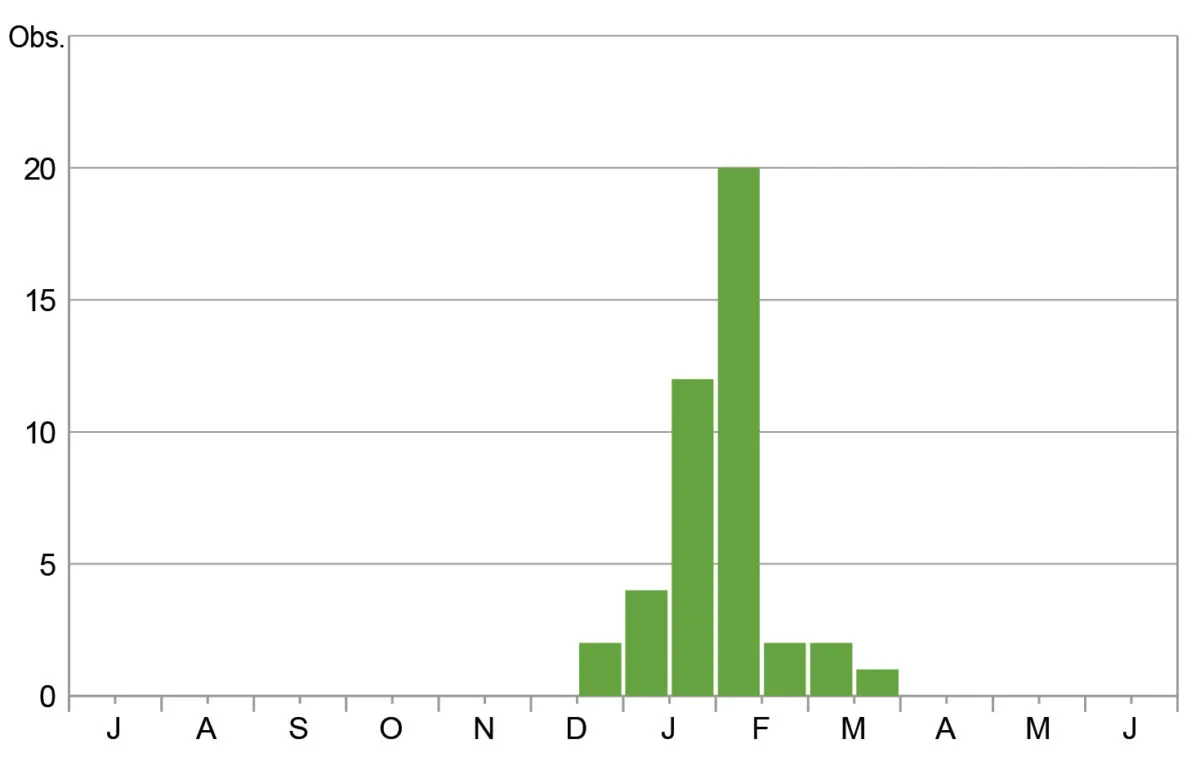
Flight period of Erebiola butleri based on iNaturalist occurrence records (accessed 2026).

POTENTIAL HABITAT MODELLING

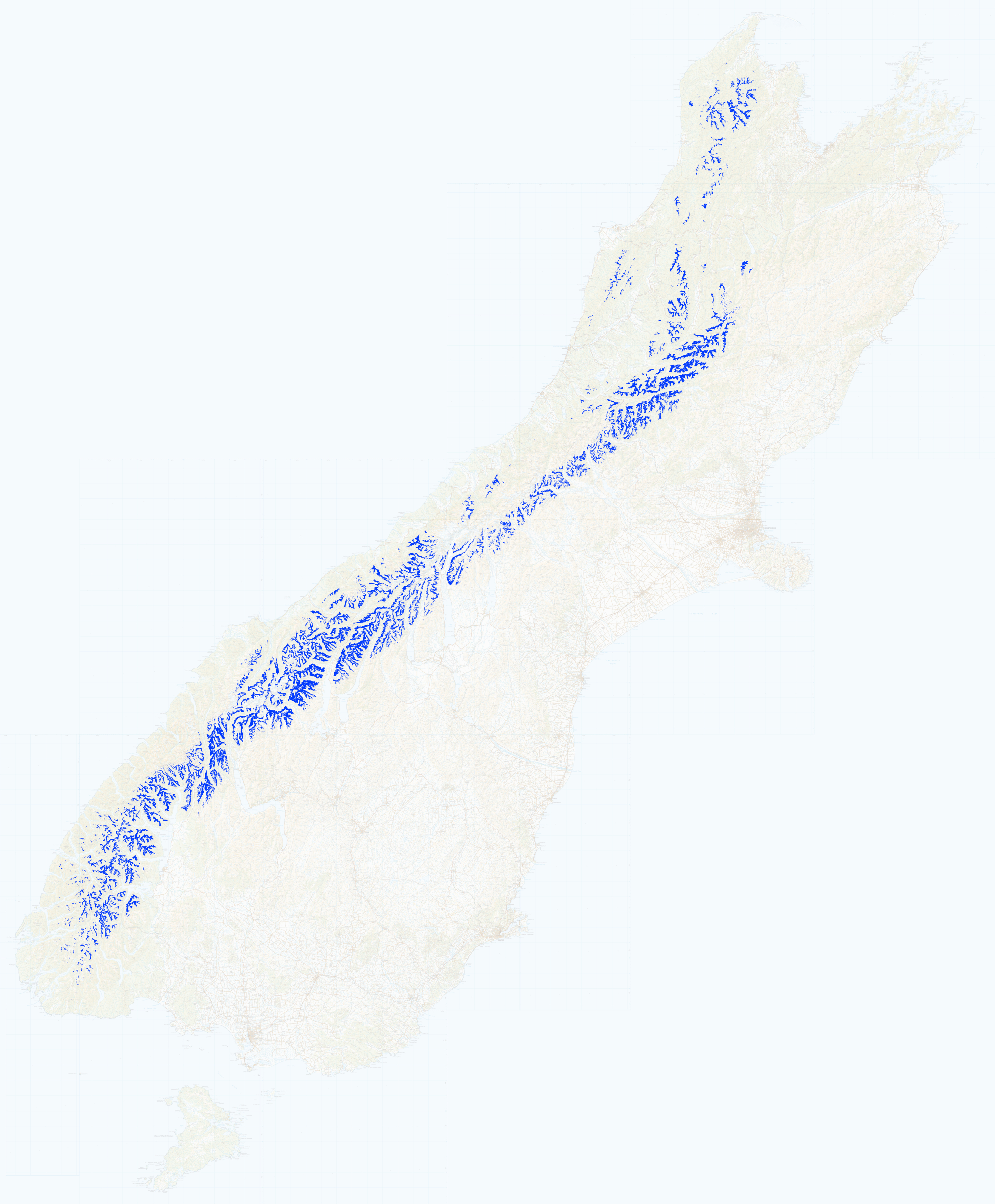
Potential habitat for Erebiola butleri was estimated by combining vegetation type, elevation, and rainfall within QGIS. Suitable areas were delineated by selecting alpine grasslands and tall tussock grasslands, restricting them to elevations between 1100 and 1800 m and further restricting them to areas receiving between 2800 and 6000 mm of annual rainfall. Rainfall thresholds were determined from values recorded at known observation sites. This additional climatic filter was necessary because vegetation data alone do not sufficiently capture vegetation associations containing Chionochloa australis, the host plant of Erebiola butleri. The resulting map should be viewed as an approximate representation of suitable habitat for Erebiola butleri.


Potential habitat of Erebiola butleri in the South Island of New Zealand. Areas of suitable habitat (blue) correspond to alpine and tall tussock grasslands restricted by elevation and rainfall constraints, approximating the distribution of Erebiola butleri.

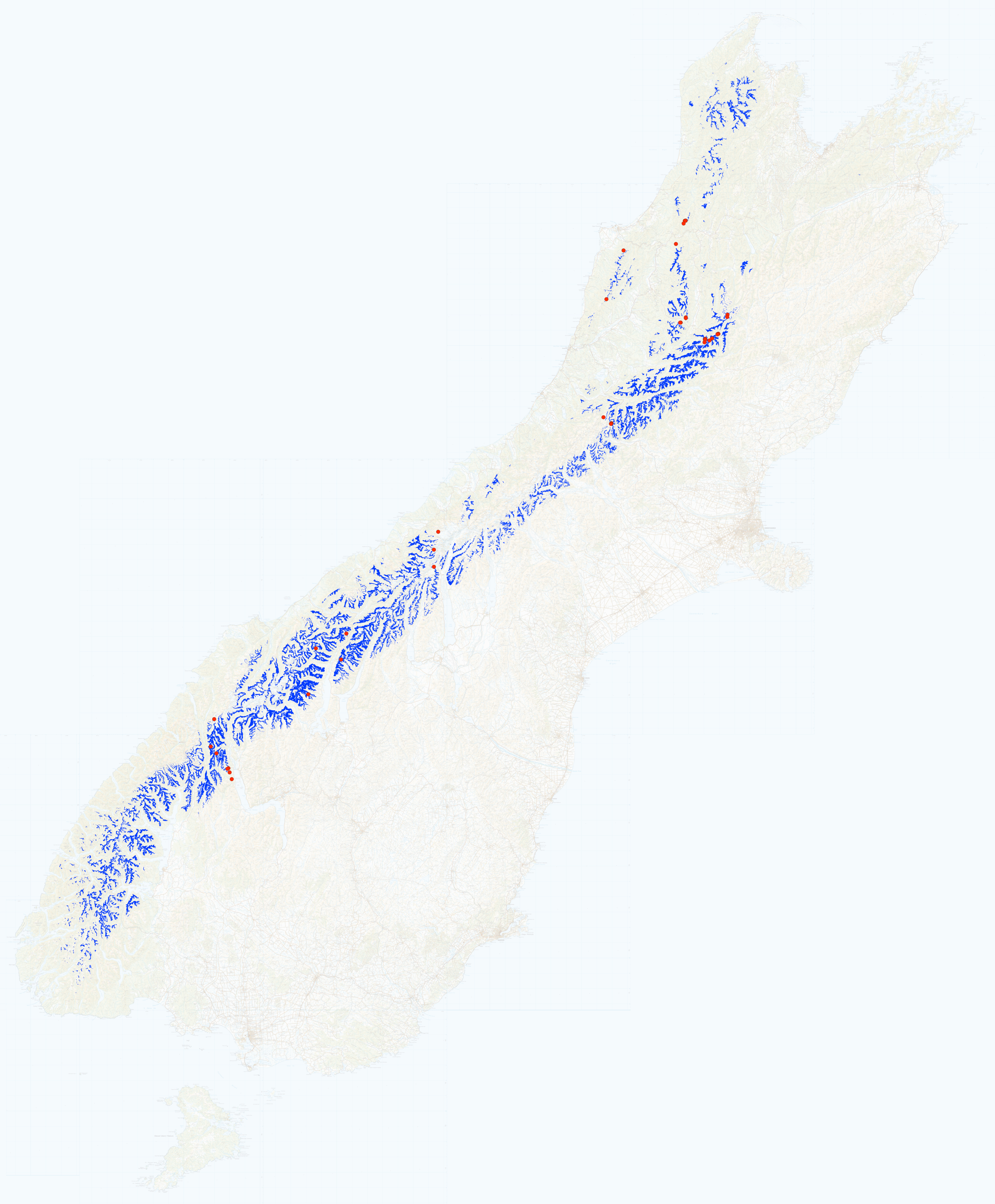
Potential habitat and occurrence records of Erebiola butleri. Predicted habitat (blue) is shown together with observation records (red points; iNaturalist, accessed 2026). The close correspondence between observations and predicted areas supports the ecological relevance of the model, while highlighting regions of suitable habitat that remain under-sampled.

Data sources

Habitat modelling was based on the Land Cover Database v6.0 for vegetation, the LINZ 8 m Digital Elevation Model (2012) for elevation, and the NZEnvDS Total annual precipitation v1.0 for climatic data.

PHOTO GALLERY

Male, Klondyke Valley (West Coast), 1400 m, 8 February 2026 - photo Vincent Baudraz

Male, Klondyke Valley (West Coast), 1400 m, 8 February 2026 - photo Vincent Baudraz

Male, Klondyke Valley (West Coast), 1400 m, 8 February 2026 - photo Vincent Baudraz

Male, Klondyke Valley (West Coast), 1400 m, 8 February 2026 - photo Vincent Baudraz

Male, Klondyke Valley (West Coast), 1400 m, 8 February 2026 - photo Vincent Baudraz

Male, Klondyke Valley (West Coast), 1400 m, 8 February 2026 - photo Vincent Baudraz

Male, Klondyke Valley (West Coast), 1400 m, 8 February 2026 - photo Vincent Baudraz

Male, Klondyke Valley (West Coast), 1400 m, 8 February 2026 - photo Vincent Baudraz

Male, Klondyke Valley (West Coast), 1400 m, 8 February 2026 - photo Vincent Baudraz

Female, Klondyke Valley (West Coast), 1400 m, 8 February 2026 - photo Vincent Baudraz

Habitat with Chionochloa australis, Klondyke Valley (West Coast), 1400 m, 8 February 2026 - photo Vincent Baudraz

Worn male, Klondyke Valley (West Coast), 1400 m, 8 February 2026 - photo Vincent Baudraz

Male, Klondyke Valley (West Coast), 1400 m, 8 February 2026 - photo Vincent Baudraz

Male, Klondyke Valley (West Coast), 1400 m, 8 February 2026 - photo Vincent Baudraz

Male, Klondyke Valley (West Coast), 1400 m, 8 February 2026 - photo Vincent Baudraz

Male, Klondyke Valley (West Coast), 1400 m, 8 February 2026 - photo Vincent Baudraz

Male, Mount Haast (West Coast), 1300 m, 7 February 2026 - photo Vincent Baudraz

Habitat with Chionochloa australis, Mount Haast (West Coast), 1300 m, 7 February 2026 - photo Vincent Baudraz